Local Storage seems to be disabled in your browser.
For the best experience on our site, be sure to turn on Local Storage in your browser.

Uni- and bidirectional knife gate valves
The unidirectional and bidirectional knife gate valves in this range are designed to deliver reliable shut-off performance across water treatment facilities, industrial process lines, and bulk material handling systems. Available with cast iron, ductile iron, or stainless steel bodies and fitted with stainless steel gates, they provide strong mechanical durability and stable operation in demanding environments. With a choice of seat materials such as EPDM, FKM, PTFE and others, these valves ensure secure sealing across a wide spectrum of fluids, slurries, powders, and solid-laden media. Whether the installation requires controlled flow in a single direction or full tightness on both sides of the gate, they offer robust performance, low head loss, and dependable functionality under challenging service conditions.
Precision, reliability, and versatility for demanding flow control applications
Water and wastewater networks
Treatment plants and pumping stations
Paper and chemical pulp production
Food industry
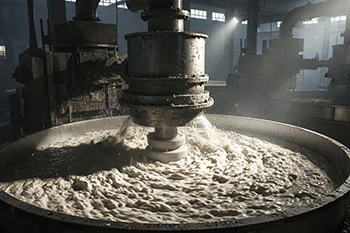
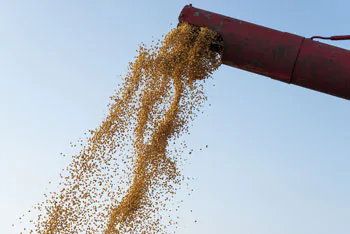
Powder and bulk material handling
Chemical process lines
Explore this page to learn more about the differences and common characteristics of unidirectional and bidirectional knife-gate valves, and browse our complete product range. Discover the features, applications, and technical details that will help you choose the right valve for your system.
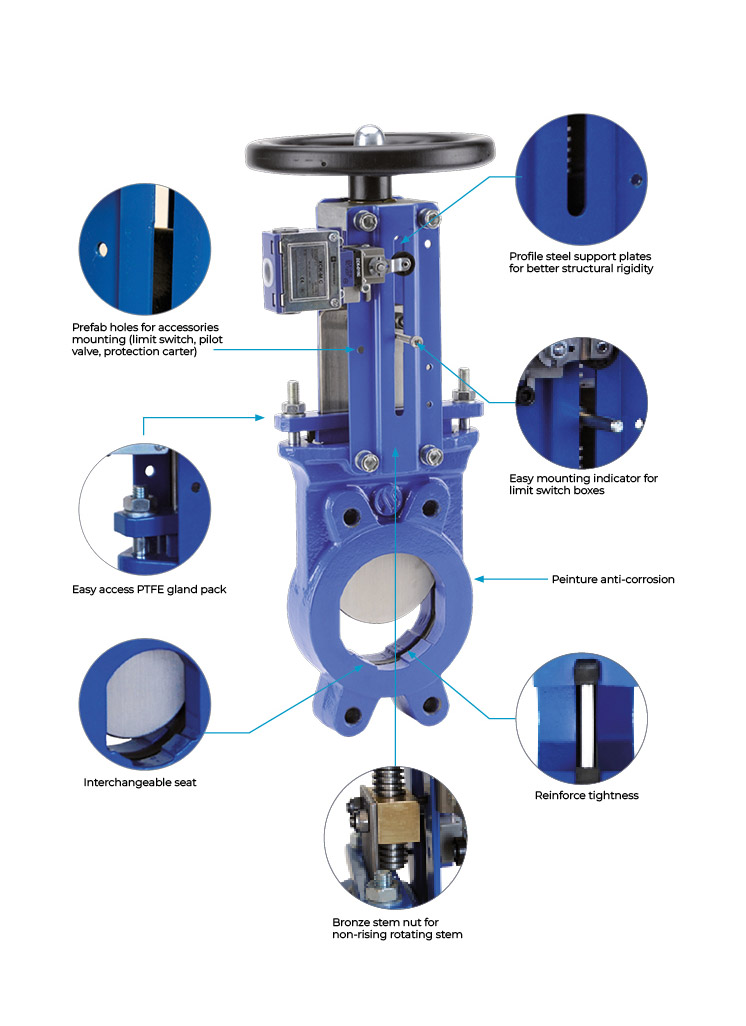
Bidirectional knife gate valve
Differences between uni- and bidirectional knife gate valves
| Unidirectional | Bidirectional | |
|---|---|---|
| Flow direction | Unidirectional tightness - Seals effectively only with flow in one defined direction. The body usually features an arrow showing the required flow direction. | Bidirectional tightness - Seals effectively with flow from either direction. It incorporates two sealing faces (or seats), so sealing does not depend on flow orientation. |
| Sealing mechanism | The gate bears against a single seat. Pressure applied from the opposite side does not load the seat correctly, so the valve can only seal in one direction. | The design uses two seats (or dual sealing surfaces), often with an elastic element, to ensure sealing from both sides. Some bidirectional models also feature a through-going body that eliminates internal cavities, improves flow conditions, and reduces turbulence. |
| Seats | NBR, EPDM, WHITE EPDM, FKM, SILICONE, METAL | NBR, EPDM, FKM |
| Installation flexibility | Less flexible: sealing is directional, so installation must follow the flow arrow. | More flexible: sealing is effective in both directions, so flow orientation is not a constraint. Suitable for systems with possible flow reversal or dead-end service. |
| Mechanical forces & Actuation | Typically requires lower stem (gate) force, as only a single seat is compressed, making the manoeuvre easier by hand, pneumatic, or electric means. | Often requires higher stem force due to dual seats or more complex sealing. Closing or opening may require a higher torque, and the more elaborate seat design can increase cost. |
| Cost and Complexity | Design is straightforward, making the valve generally cheaper to buy and easier to maintain. | Design is more complex, which increases purchase and maintenance costs. Maintenance may involve replacing both seats, but the design offers operational benefits that can justify the higher cost. |
Common points
| Feature | Unidirectional & Bidirectional |
|---|---|
| Usage | Suitable for water, wastewater treatment, chemical pulp, powders, food industry, and chemical applications. |
| Valve position | Designed to operate in fully open or fully closed position. |
| Head loss | Low head loss due to straight-through flow path. |
| Installation | Installed between PN10 flanges. |
| Bolt holes | Equipped with full-crossing threaded lower holes and blind threaded upper holes. |
| Standard Actuation | Delivered with handwheel as standard. |
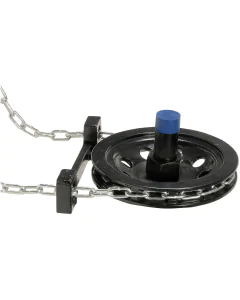
| Optional Actuation | Available with lever or chain-operated handwheel as options. |
| Coating | 50% epoxy and 50% polyester coating, blue RAL 5005. |
To choose the product that best suits your chosen fluid and service conditions, please consult the technical data sheets accessible from the product pages.
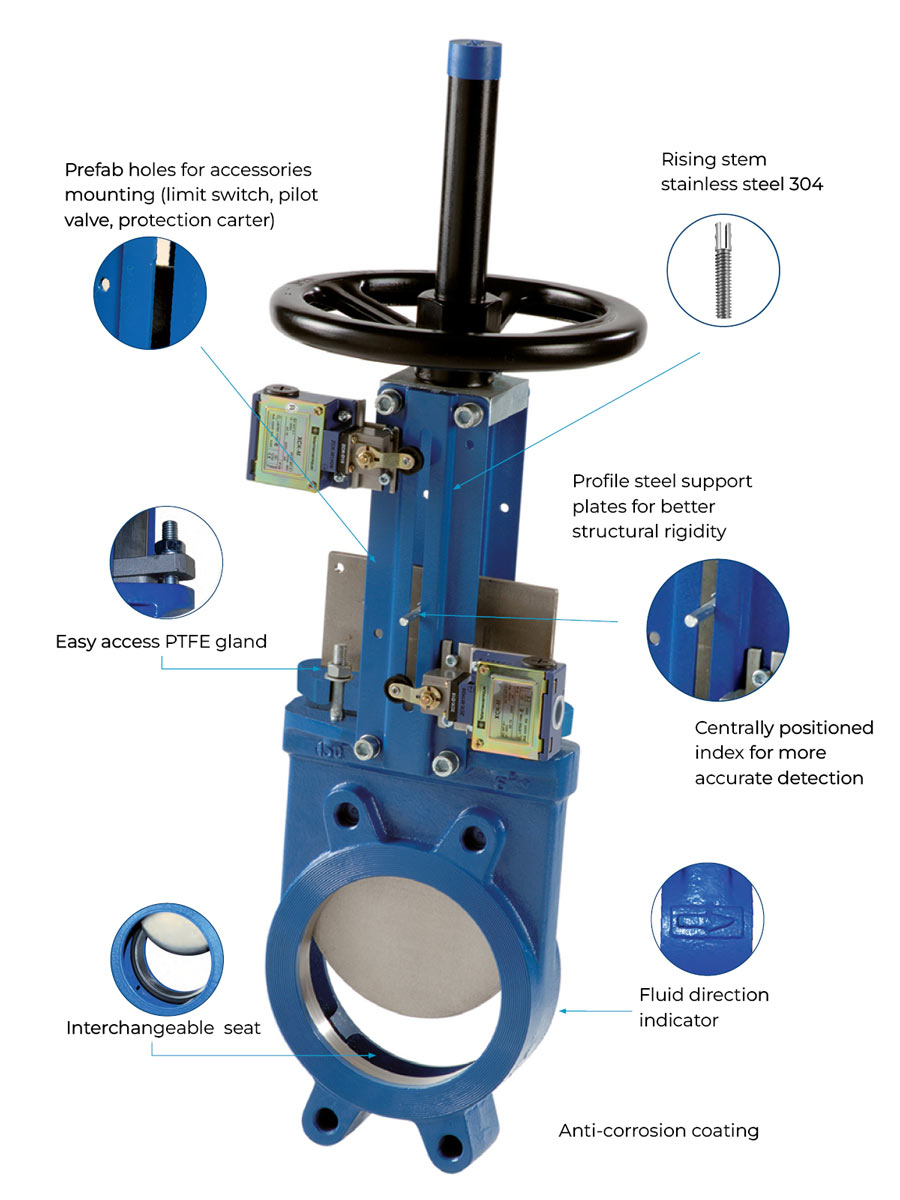
Unidirectional knife gate valve
Knife gate valves are used in an exceptionally wide range of industries, from wastewater treatment and process water lines to abrasive slurries, food production, powders and bulk solids. While unidirectional valves are ideal for standard flow conditions, bidirectional designs offer superior adaptability in systems where the pressure direction may vary or where full sealing on both sides of the gate is essential.
Across these applications, the right valve is not only a matter of shut-off capability, but also longevity, maintainability, and compatibility with the media being handled. This is why our catalogue includes models tailored for general-purpose installations as well as highly specialised environments.

Our manual uni- and bidirectional knife gate valves
-
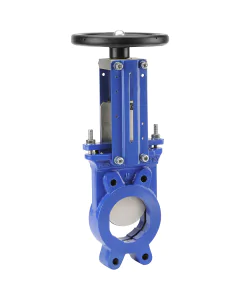
-
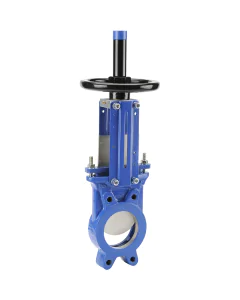
-
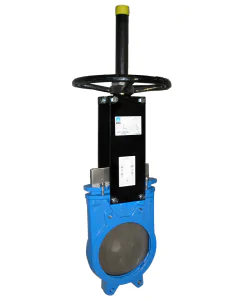
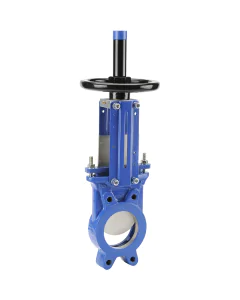 Cast iron knife gate valve 171 F304 gate/EPDM seat with wheelPrice according to configuration
 -
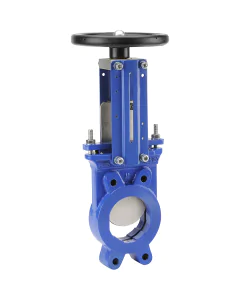
-
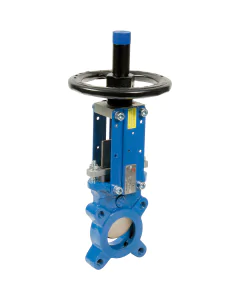 Cast iron knife gate valve 176 F304 gate/METAL seat with wheelPrice according to configuration
 -
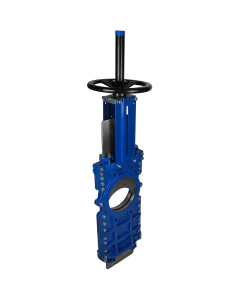 Cast iron knife gate valve 179 F304 gate/EPDM seat Through conduitPrice according to configuration
 -
Cast iron knife gate valve 178I F316 gate and bolting/NBR seatPrice according to configuration
-
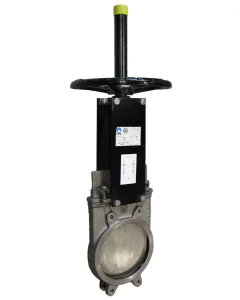
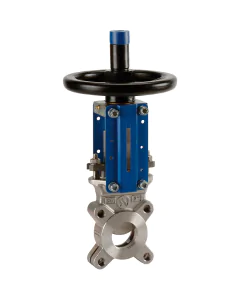 Stainless steel knife gate valve 172 F304 gate/EPDM seat with wheelPrice according to configuration
 -
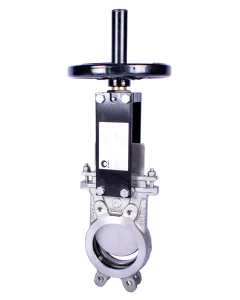
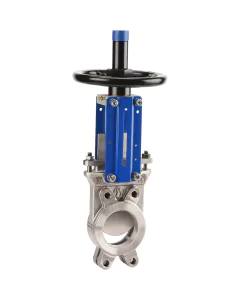 Stainless steel knife gate valve 173 F304 gate/METAL seat with wheelPrice according to configuration
 -
-
-
-
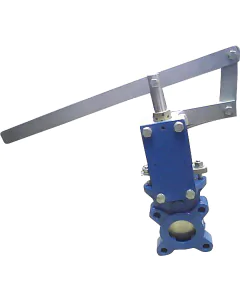 Quick opening - Lever set for knife gate valves 170-172-176Price according to configuration
 -
-
-
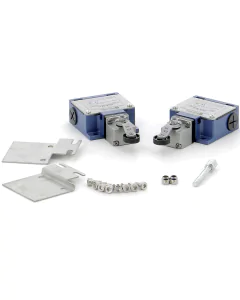 Limit switch kit for unidirectional knife gate valvesPrice according to configuration
 -
-
-
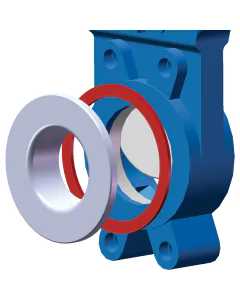
-
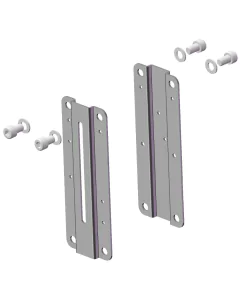 Stainless steel lateral brackets and bolts for knife gate valvesPrice according to configuration
Beyond Manual Knife Gate Valves
In addition to conventional handwheel-operated models, many industrial systems benefit from automated control. Pneumatic and electric actuators improve safety, enable faster operation cycles, and integrate easily into supervisory systems. Whether used in a treatment plant, an industrial process line, or a silo extraction point, automated knife gate valves help maintain stable flow control while reducing manual intervention.
Their design also supports harsh operating conditions: vibration, abrasive particles, fluctuating pressure, or corrosive atmospheres. By combining reliable valve bodies with robust actuators, the result is a high-performance shut-off system suited for both continuous operation and emergency isolation.
Our pneumatic actuated knife gate valves
-
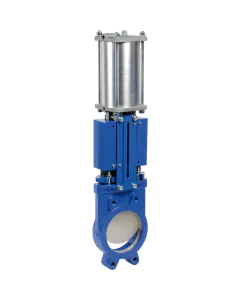 Cast iron knife gate valve 170 + double acting pneumatic actuatorPrice according to configuration
 -
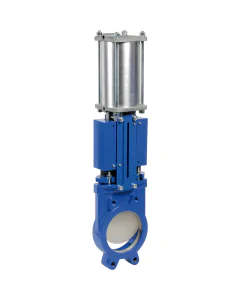 Cast iron knife gate valve 171 + double acting pneumatic actuatorPrice according to configuration
 -
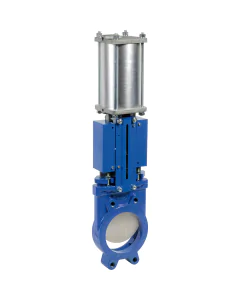 Cast iron knife gate valve 176 + double acting pneumatic actuatorPrice according to configuration
 -
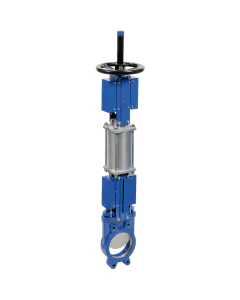 Knife gate valve 170 +double acting pneu. actuator +manual overridePrice according to configuration
 -
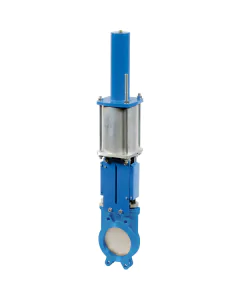 Cast iron knife gate valve 170 + spring return pneumatic actuatorPrice according to configuration
 -
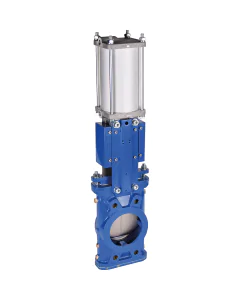 Cast iron knife gate valve 174 + double acting pneumatic actuatorPrice according to configuration
 -
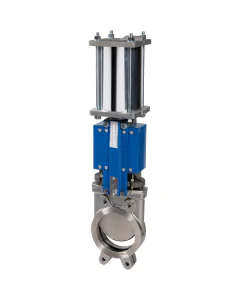 Stainless steel knife gate valve 172 +double acting pneumatic actuatorPrice according to configuration
 -
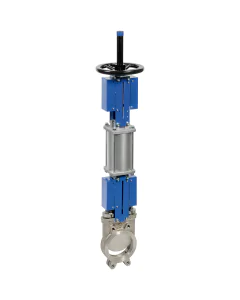 Knife gate valve 172 +double acting pneu. actuator +manual overridePrice according to configuration
 -
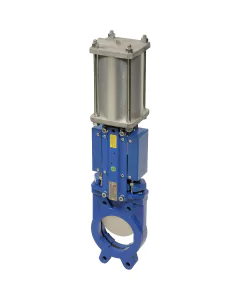 Cast iron knife gate valve 178 + double acting pneumatic actuatorPrice according to configuration
 -
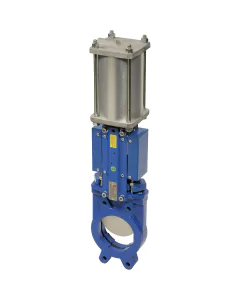 Cast iron knife gate valve 177 + double acting pneumatic actuatorPrice according to configuration
 -
 Cast iron knife gate valve 179 + double acting pneumatic actuatorPrice according to configuration
 -
 Cast iron knife gate valve 176 + spring return pneumatic actuatorPrice according to configuration
 -
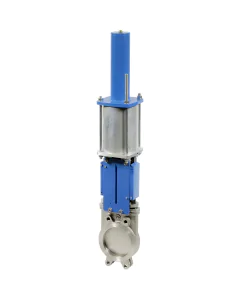 Stainless steel knife gate valve 172 +spring return pneumatic actuatorPrice according to configuration
 -
 Knife gate valve A1N2HH + double acting pneumatic actuatorPrice according to configuration
 -
 Stainless steel knife gate valve A1N2I + double acting pneumatic actuatorPrice according to configuration
 -
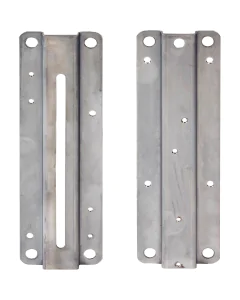
-
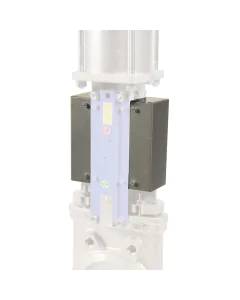 Stainless steel side covers for pneumatique actuated valvePrice according to configuration
 -
 Deflector set for pneumatique actuated unidirectional valvePrice according to configuration
 -
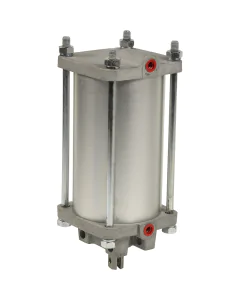 Double acting pneumatic actuator for knife gate valvePrice according to configuration
 -
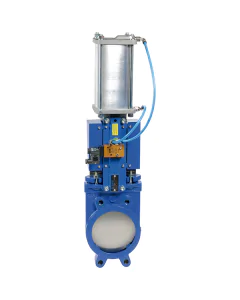
Our electric actuated knife gate valves
-
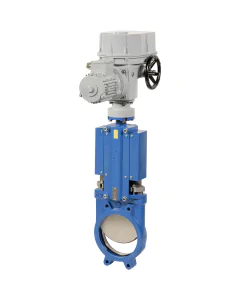 Cast iron knife gate valve 170 + SO2/MO3 multi-turn electric actuatorPrice according to configuration
 -
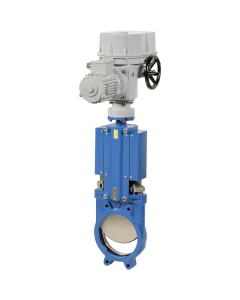 Cast iron knife gate valve 176 + SO2/MO3 multi-turn electric actuatorPrice according to configuration
 -
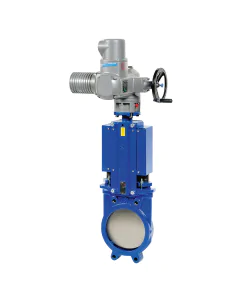 Cast iron knife gate valve 170 + SA multi-turn electric actuatorPrice according to configuration
 -
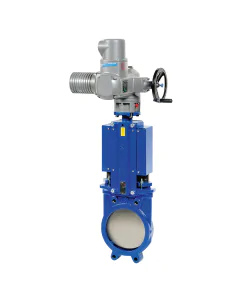 Cast iron knife gate valve 171 + SA multi-turn electric actuatorPrice according to configuration
 -
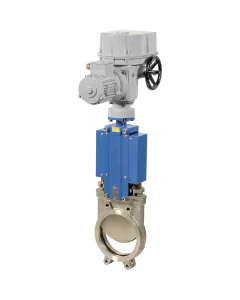 St. steel knife gate valve 172 + SO2/MO3 multi-turn electric actuatorPrice according to configuration
 -
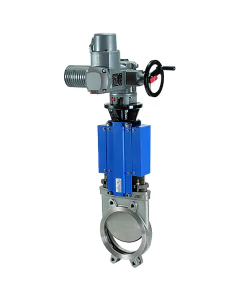 Stainless steel knife gate valve 172 + SA multi-turn electric actuatorPrice according to configuration
 -
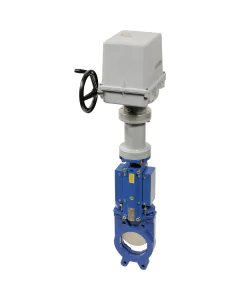 Cast iron knife gate valve 177 + SO2/MO3 multi-turn electric actuatorPrice according to configuration
 -
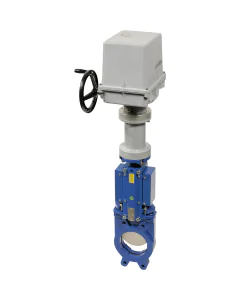 Cast iron knife gate valve 178 + SO2/MO3 multi-turn electric actuatorPrice according to configuration
 -
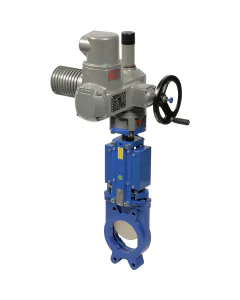 Cast iron knife gate valve 178 + SA multi-turn electric actuatorPrice according to configuration
Specialised Applications and High-Performance Designs
While many knife gate valves are designed for standard water and industrial applications, certain environments require a higher level of engineering and material performance. To meet these demands, we also supply high-end CMO knife gate valves, which are specifically developed for challenging and highly specialised process conditions.
These premium models include:
-
Under-silo knife gate valves (low or high pressure)
Designed to handle powders, pellets, and dry bulk media directly under silos or hoppers. These valves feature reinforced gates, abrasion-resistant seats, and geometries that prevent material clogging. -
Mining and slurry applications
Built for extremely abrasive materials, these valves use heavy-duty bodies, full-bore geometries, and specialised elastomers or metal-to-metal sealing systems. They ensure long-term reliability in demanding conditions such as tailings, mineral slurry transport, or thickened sludge. -
High-temperature or chemically aggressive media
With the possibility to use FKM, PTFE, silicone or white EPDM seats, these valves offer broad chemical resistance and remain stable under high thermal loads.
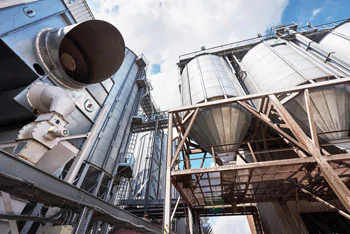
These CMO valves are not sold directly on our website but are fully available on request. To obtain specifications, pricing, or expert guidance, simply consult our catalogue and contact us by email and our team will help you select the most suitable model for your application.
Check our accessories for manual valves
-
Quick opening - Lever set for knife gate valves 170-172-176Price according to configuration
-
-
-
Limit switch kit for unidirectional knife gate valvesPrice according to configuration
-
-
-
-
Stainless steel lateral brackets and bolts for knife gate valvesPrice according to configuration
-
-
